BCC Turns 40
![]() |
![]() |
College History40 Years of Leadership and growth
Following the initial victory, however, planning for the college lagged. Rallying to get the project moving again, residents and business people formed another committee called The Greater Eastside Community College Advisory Council. The group lobbied the state legislature heavily until, in 1965, the legislature granted $30,000 to underwrite planning of a community college for the Eastside. Progress was rapid from that point forward. In late September 1965, the college began accepting applications for Winter Quarter, 1966. A total of 464 students ultimately registered, with 295 of those signing up in just the first two days. Fifty people camped out overnight to be first to register for classes. At long last, Bellevue Community College officially opened its doors on January 3, 1966, fulfilling the community's dream of a local, accessible institution of higher education. Lacking facilities of its own, the college held classes in the evening at Newport Senior High School. Construction of a permanent campus began about two years later, on a 96-acre wooded site in the Eastgate area of Bellevue, six miles southeast of downtown. The award-winning design of the new campus by Naramore, Bain, Brady and Johanson was intended to permit the expansion of buildings vertically, laterally and longitudinally, and at the time was considered radical. While construction continued, BCC moved into the first phase of completed facilities just in time for Fall Quarter 1969. Growth continued well into the 1970s, as additional buildings were brought on line to complete the new campus and serve the growing student body. The 1980s, however, brought a difficult period of slow or no growth as state funding cuts, in response to a serious economic downturn, confronted the college with severe budget challenges. The college was forced to reduce the size of its staff and cut enrollment. Happier times returned in the 1990s, as the college entered a new period of rapid growth. Enrollments increased throughout the decade, reaching a peak of 39,300 in 2000-01. To serve the additional demand, the college added six new buildings between 1993 and 2004, more than doubling the square footage of college facilities. Among the new building was the innovative National Workforce Center for Emerging Technologies (formerly called the Northwest Center for Emerging Technologies), supported by private gifts and opened in 1998. In addition to computer labs and high-tech classrooms, the building houses an Advanced Technology Education Center of Excellence funded by the National Science Foundation, whose purpose is to help develop the national workforce for the information economy. The NWCET’s educational products and programs have been used nationwide, bringing new stature to Bellevue Community College. Also among the new facilities is the Early Learning, Family and Childcare Center at the campus' north edge, developed jointly with Costco. The Center houses a model program that integrates the college’s daycare, parent education and early education programs. The growth and development of BCC has been led since the beginning by seven college presidents: Founding President Merle Landerholm (deceased, 1976); Dr. Roy P. Wahle (interim), 1976; Dr. Wayne G. Siegel (interim), 1976-1977; Dr. Thomas E. O'Connell, 1977-1983; Dr. Paul N. Thompson, 1983-88; Dr. Richard White (interim), 1988-89; and B. Jean Floten, who has served as president since June 1989.
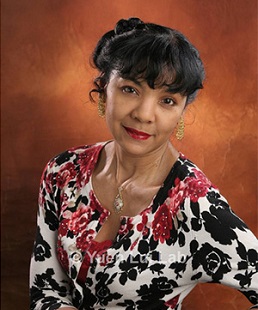
President Floten has led BCC than any other president in its history. Under her leadership, BCC has become the third largest institution of higher learning in Washington State, known nationally for its innovations in programs and teaching methods. With roots firmly planted in the community, Bellevue Community College has come of age with the rest of the Eastside. Over the years it has reflected the community’s growth and development from a quiet, rural community to a busy, ethnically diverse, high-tech hub. And all the while Bellevue Community College has continued to fulfill the community’s dream of a local, accessible institution of higher education, building futures for the region it serves. More on BCC’s History – An excerpt from Pres. Floten’s Opening Day Address, Sept. 2005 |